Posts

Showing posts with the label recommender system

SQL Joins

Image
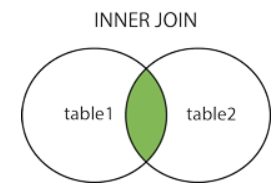
Joins are used to combine rows from two or more tables based on related columns between them. Joins allow you to retrieve data from multiple tables simultaneously, enabling you to create complex queries that fetch data from different sources. There are different types of joins in SQL, including: INNER JOIN Returns only the rows that have matching values in both tables based on the specified join condition. It discards non-matching rows from both tables. Example:           create table t1(x int); insert into t1 values(1); insert into t1 values(1); insert into t1 values(0); create table t2(y int); insert into t2 values(0); insert into t2 values(1); insert into t2 values(1);           select * from t1 inner join t2 on t1.x = t2.y Output: 2. LEFT JOIN (or) LEFT OUTER JOIN Returns all the rows from the left (or first) table and the matching rows from the rig...

Machine Learning Foundations - Recommender System - Assignment Quiz

1) Which of the artists below have had the most unique users listening to their songs? a) Kanye West b) Foo Fighters c) Taylor Swift d) Lady GaGa 2) Which of the artists below is the most popular artist, the one with highest total listen_count, in the data set? a) Taylor Swift b) Kings of Leon c) Coldplay d) Lady GaGa 3) Which of the artists below is the least popular artist, the one with smallest total listen_count, in the data set? a) William Tabbert b) Velvet Underground & Nico c) Kanye West d) The Cool Kids

Machine Learning Foundations - Recommender System - Quiz

1) Recommending items based on global popularity can (check all that apply): a) provide personalization b) capture context (e.g., time of day) c) none of the above 2) Recommending items using a classification approach can (check all that apply): a) provide personalization b) capture context (e.g., time of day) c) none of the above 3) Recommending items using a simple count based co-occurrence matrix can (check all that apply): a) provide personalization b) capture context (e.g., time of day) c) none of the above 4) Recommending items using featurized matrix factorization can (check all that apply): a) provide personalization b) capture context (e.g., time of day) c) none of the above 5) Normalizing co-occurrence matrices is used primarily to account for: a) people who purchased many items b) items purchased by many people c) eliminating rare products d) none of the above 6) A store has 3 customers and 3 products. Below are the learned feature vectors for...